



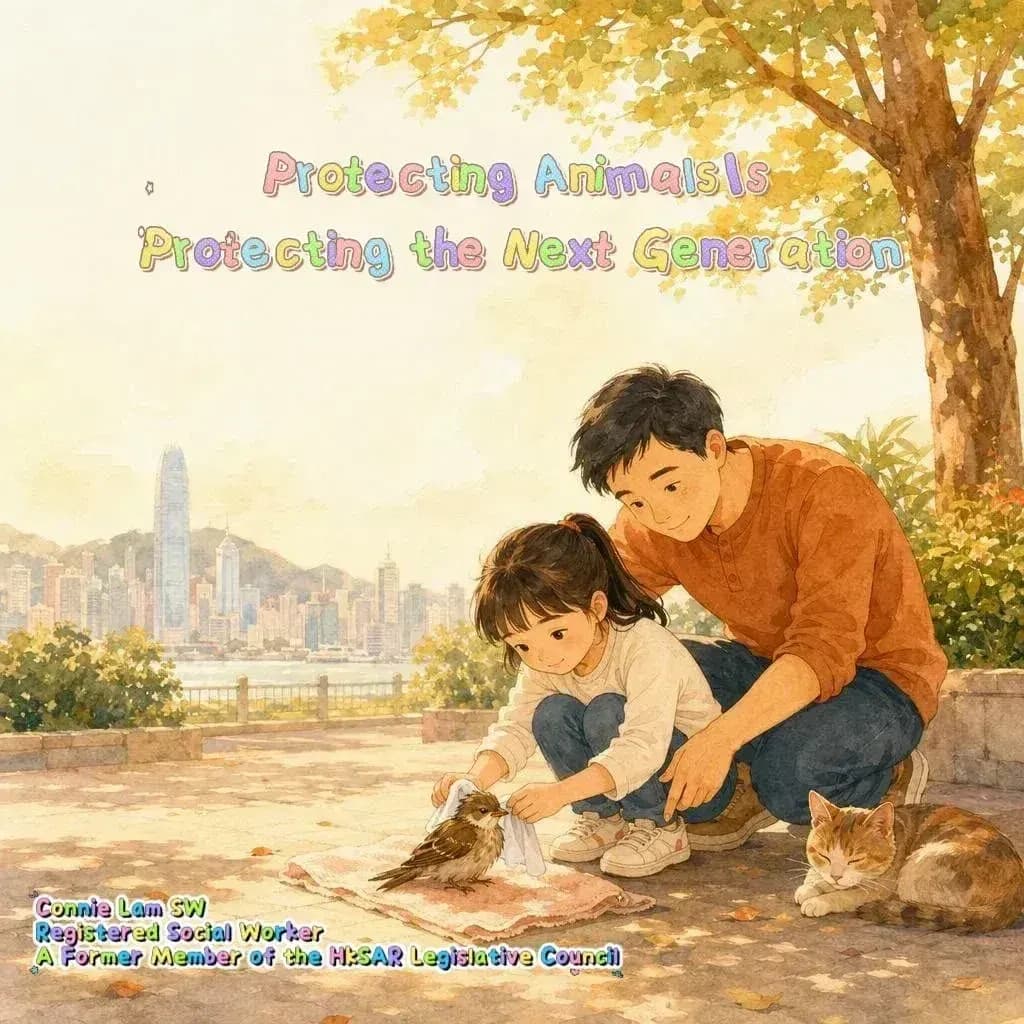
I believe it belongs in the same conversation. How we teach children to treat animals is part of how we teach them to use their strength, respond to vulnerability and accept responsibility for their actions. These lessons depend as much on what adults do as on what we tell children.
When a young person hurts an animal, anger is understandable. The cruelty must stop, the animal must be protected and the young person must face appropriate consequences. But I am concerned by how easily the discussion ends with punishment. For parents, teachers and social workers, that is where much of the work begins: understanding what happened, establishing whether it has happened before and deciding what supervision or support is needed.
A public apology cannot tell us whether a child’s behaviour has changed. Someone has to follow up.
Our concern should also extend beyond deliberate cruelty. Failing to provide proper care, ignoring distress or leaving an animal without adequate supervision can have serious consequences. Dog attacks raise different questions from intentional abuse; we should not assume that every incident has the same cause. Nevertheless, adults who take an animal into their care must take responsibility for its welfare and the safety of people around it.
That is the standard children need to see.
An animal cannot explain its distress in words or complain to a teacher. A child has to learn to notice when it is frightened, recognize when play has become rough and accept that it may not want to be touched. These are practical lessons in respecting needs and boundaries that differ from our own.
At home, the lesson may begin with something ordinary. A young child pulls a dog’s tail. An adult intervenes. “Don’t do that” may stop the behaviour, but an explanation gives the child more to understand: it hurts; the dog is trying to move away; wanting to play does not make it all right.
The adult must also supervise. We should not expect a child to judge every risk or an animal to tolerate every mistake. Teaching gentleness matters, but it does not replace keeping an interaction safe.
I would place that adult responsibility at the centre of animal welfare education. Asking children to be caring means little if we laugh at videos of frightened animals, overlook rough handling or leave someone else to do the daily work. Children notice the gap between our instructions and our behaviour.
For families considering a pet, the discussion should therefore go beyond choosing a breed or a name. Who will provide daily care and exercise? Who will pay for veterinary treatment? What happens during holidays, or when the children lose interest? Can the adults manage the animal safely?
Sometimes the responsible answer is that the family is not ready. Explaining that decision can itself teach a child something important: wanting an animal is not the same as being able to care for one. A pet should not be brought home in the hope that it will turn a reluctant child into a responsible carer.
Children also learn from what adults do when care becomes difficult. If an animal needs a new home, its needs and any known behavioural concerns should be disclosed honestly, with appropriate support sought where safety is in question. Responsibility does not end simply because the animal leaves our home.
Schools can build on these lessons without every classroom acquiring a rabbit or a hamster. Students can discuss abandonment, explore the demands of pet ownership or learn from people who care for rescued animals. Older students can consider harder questions: what should happen when an owner can no longer cope? Who should respond when concerns are repeatedly raised? How can we protect both animals and people?
Such discussions should give students room to think and disagree, rather than become another worksheet telling everyone to “be kind”.
Where schools introduce animal-care programmes, the arrangements matter as much as the educational aims. Daily care, funding, professional support and school holiday cover need to be planned. Students with allergies or fears must be considered, and animals must have opportunities to rest and withdraw from attention. Their welfare should not become secondary to the lesson.
None of this means that a child who loves dogs will never bully a classmate, or that keeping a school pet will prevent violence. The value is more practical: adults can use these encounters to help children recognize distress, respect limits and consider the consequences of what they do.
Among friends, putting those lessons into practice can be difficult. It is easy to say cruelty is wrong when nobody disagrees. It is harder when someone frightens a stray animal and others begin filming. Objecting may feel embarrassing or unsafe.
Young people should not be expected to put themselves in danger. They can refuse to join in, avoid sharing footage for entertainment and seek help from a trusted adult. Parents and teachers need to talk through these choices beforehand—and be ready to listen when a child raises a concern.
When harm has occurred, accountability must be more than a performance for an angry audience. Once the animal is safe and the harmful behaviour has stopped, adults need to agree who will follow up, what boundaries will be set and when progress will be reviewed. The young person needs to understand the harm caused, face appropriate consequences and receive support where necessary.
Understanding the behaviour does not excuse it. Nor does accountability require public humiliation. I would rather see sustained work with a child and family than a forced apology followed by silence. The quieter work is less visible, but it is what allows us to judge whether anything is changing.
Parents and teachers already carry many responsibilities. Animal welfare may sound like another worthy cause competing for limited time. I do not see animal welfare education as something that must always become a separate lesson. Much of it can be woven into everyday conversations about care, boundaries and responsibility.
Not every child will grow up loving animals. They do not have to. They do need to understand that fear, dislike or indifference does not justify causing suffering, and that choosing to care for an animal brings obligations that last beyond the initial excitement.
Protecting animals matters in its own right. In doing so, adults also show children what responsible care requires: noticing distress, respecting limits, asking for help and following through when the work becomes inconvenient.
Those lessons begin with what we allow, what we explain and what we do ourselves.
About the author
Connie Lam SW is a registered social worker who holds an MASW (FCPFT) and has over a decade of experience in social welfare and policy research. A former member of the HKSAR Legislative Council, she advises the Hong Kong Emotional Health Association on research and training and serves as an adviser to The Ties Foundation Limited. She has also served as a Director of an international NGO.